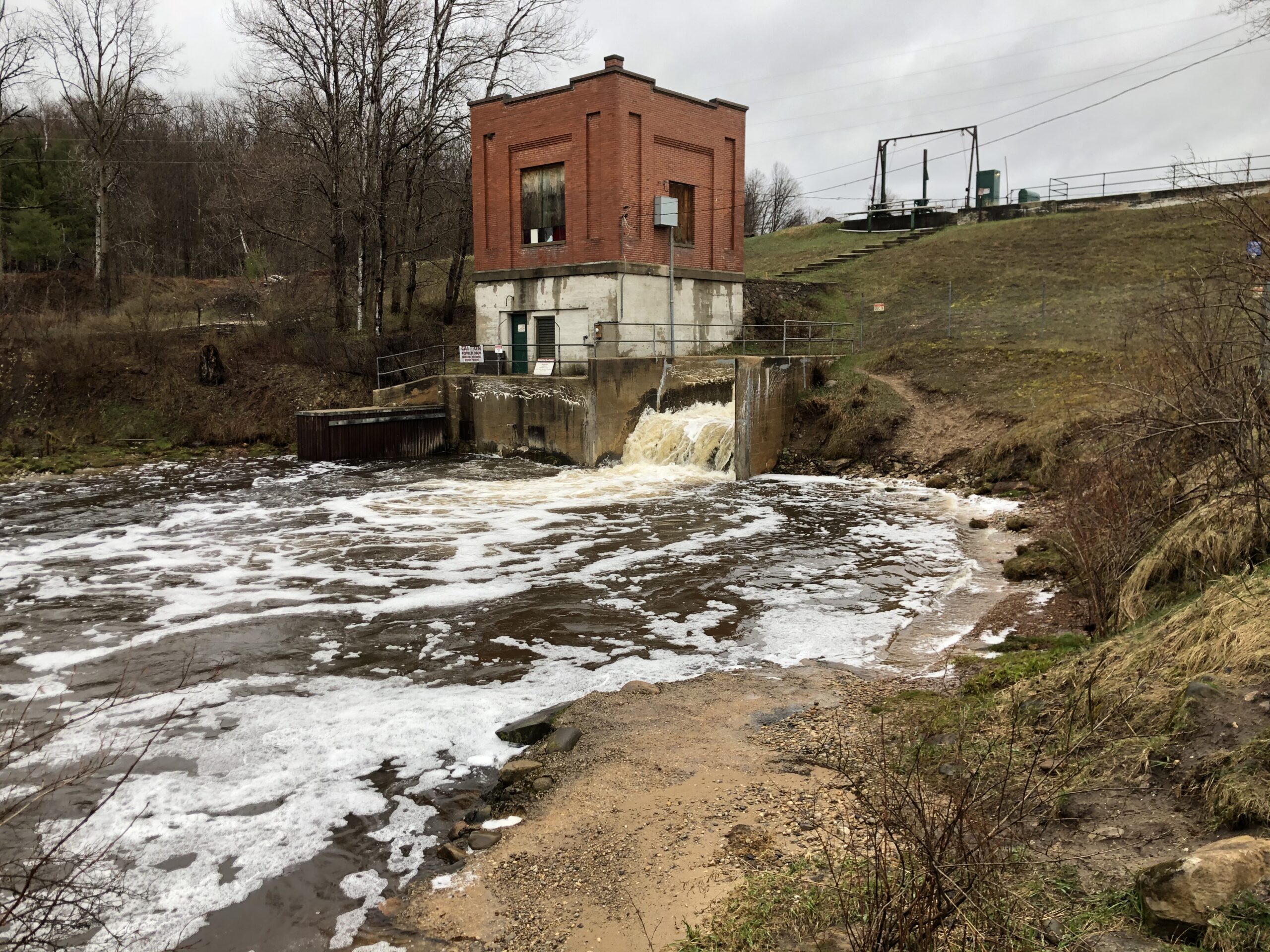
The Boyne River has been the constant thread through my life: the place where I learned to read water, where I first felt the thrill of a trout taking a dry fly, and where I have watched seasons and generations pass along its banks. As a board member of Friends of the Boyne River and a lifetime member of Trout Unlimited, I write from a place of deep affection and long familiarity. That affection makes it impossible for me to be neutral about what I have seen in recent years at the Boyne Hydro facility. What began as a manageable tension between renewable energy and river health has, in my view, become a pattern of operational choices and regulatory lapses that threaten the ecological integrity of the river and the safety of the communities that depend on it.
Hydropower can be a responsible part of a diversified energy portfolio, but only when operators meet the conditions set by their licenses and when regulators enforce those conditions. The Federal Energy Regulatory Commission (FERC) license that governs the Boyne Hydro facility is not a suggestion; it is a legal framework designed to balance energy production with public trust responsibilities: maintaining flows that mimic natural conditions, protecting water quality and aquatic habitat, ensuring fish passage or mitigation, keeping infrastructure safe, and providing transparent reporting to the public and to oversight agencies. Over the past several years, and with alarming clarity during the spring of 2026, the facility’s operations have fallen short of those obligations in ways that have real, measurable consequences for trout, macroinvertebrates, riverbanks, and people.
One of the most damaging operational patterns I have observed is the failure to maintain run‑of‑river conditions. Instead of allowing flows to follow the river’s natural rhythms, the facility has at times held back water to maximize generation and then released it in sudden surges. Those abrupt swings scour the riverbed, destroy redds where trout spawn, and strand juvenile fish in shallow pockets. Conversely, during off‑peak periods the facility has allowed flows to drop to unnaturally low levels, concentrating heat and reducing dissolved oxygen at precisely the times when cold‑water species need refuge. These are not theoretical harms; they are the kinds of impacts that anglers and biologists can see in the field: diminished insect hatches, fewer young trout showing up in summer electrofishing surveys, and banks that are collapsing where they were once stable.
Transparency and reporting are central to accountability, and here too the facility has been deficient. The FERC license requires timely reporting of water levels, discharge, and operational changes, and it requires that certain data be made available to the public. Yet the flow records have been inconsistent, real‑time data have been sparse, and requests for documentation during critical events have been met with delays or incomplete responses. When a community cannot verify whether a licensee is complying with its obligations, trust erodes and the only recourse left to citizens is to escalate complaints to regulators—an expensive and time‑consuming process that should not be necessary when the licensee is acting in good faith.
The ecological consequences of these operational failures are cumulative. Trout depend on cold, stable flows and clean gravel for spawning. Macroinvertebrates—the mayflies, caddisflies, and stoneflies that form the base of the trout diet—are sensitive to both temperature and substrate disturbance. Sudden high flows scour the substrate and wash away the organisms that trout feed on; prolonged low flows warm the water and reduce oxygen, stressing fish physiologically and making them more susceptible to disease. Over time, these stressors reduce recruitment and shift population structure toward older, fewer fish. For a river like the Boyne, which has historically supported robust cold‑water fisheries, that shift is both ecologically and culturally devastating.
The spring of 2026 brought these vulnerabilities into stark relief. Michigan experienced an unusually rapid snowmelt combined with repeated heavy rain events, producing runoff volumes that tested the capacity of many dams across the state. The Boyne Hydro facility faced inflows far above typical spring levels, and the way those inflows were managed exposed both operational shortcomings and structural concerns. Emergency spillway releases and rapid downstream surges caused bank erosion and localized property damage. Residents downstream reported delayed or confusing notifications, and local emergency services struggled to coordinate with the facility in real time. In a crisis, minutes matter; the lack of clear, timely communication increased risk to people and property.
The Boyne Hydro facility is not an isolated case. Michigan has thousands of dams, many of them aging and built to standards that predate modern hydrological science and the realities of a changing climate. The catastrophic failures of other dams in the state in recent years were a wake‑up call, but the systemic response has been uneven. Many facilities still operate with undersized spillways, deferred maintenance, and emergency action plans that have not been updated to reflect current risks. Climate change is altering the timing and intensity of runoff: warmer winters, earlier snowmelt, and more intense spring storms mean that dams face higher peak flows more frequently. When an operator fails to plan for those realities, the consequences are borne by the river and by downstream communities.
Beyond the immediate physical risks, there is a moral and legal dimension to the facility’s behavior. A FERC license is a public contract: the licensee is granted the right to use a public resource—the river—in exchange for meeting conditions that protect the public interest. When those conditions are ignored or only partially met, the public has a right to demand enforcement. That enforcement must be meaningful. It must include independent ecological assessments, transparent audits of operational records, and, where necessary, corrective actions that range from mandated operational changes to fines or, in extreme cases, reconsideration of the license itself. The goal is not to punish hydropower per se, but to ensure that the public trust is honored.
Community involvement is essential to this process. The Boyne River is a shared resource: anglers, property owners, business owners, and conservation groups all have a stake in its health. Local stakeholders should have a seat at the table when operational plans are developed or revised, when emergency action plans are updated, and when ecological monitoring is designed. Too often, decisions are made behind closed doors, and the people who live with the consequences are left to react rather than to participate. Meaningful public engagement builds better outcomes because it brings local knowledge, values, and priorities into the decision‑making process.
There is also a difficult but necessary conversation to be had about decommissioning. Across the country, communities are choosing to remove dams that no longer serve a compelling public purpose or that cannot be brought into compliance without disproportionate cost. Dam removal is not a panacea, and it requires careful planning to manage sediment, restore habitat, and address community concerns. But it is a legitimate option when a facility cannot operate responsibly and when the ecological and social benefits of removal outweigh the benefits of continued operation. For the Boyne River, decommissioning should be considered alongside other remedies, not dismissed out of hand.
What does responsible stewardship look like in practice? First, the facility must commit to true run‑of‑river operations that avoid artificial drawdowns and surges. Second, it must provide transparent, real‑time flow and operational data to the public and to regulators. Third, it must fund independent ecological monitoring to document impacts on trout, macroinvertebrates, and habitat, and it must act on the findings of those studies. Fourth, it must update its infrastructure and emergency action plans to meet contemporary engineering and hydrological standards, including the realities of climate change. Fifth, it must engage the community in meaningful ways, incorporating local knowledge into planning and response. Finally, regulators must be prepared to enforce the license conditions vigorously and to require corrective action when necessary.
I do not make these demands lightly. I have spent a lifetime on the water, and I understand the value of renewable energy and the complexities of managing river systems. My point is not to oppose hydropower categorically; it is to insist that hydropower operate within the bounds of the public trust. When a license is granted, it carries obligations that are legal, ecological, and ethical. Meeting those obligations is the price of operating on a public river.
There is reason for cautious optimism. Rivers are resilient when given the chance to recover. Where dams have been removed or operations improved, we have seen rapid rebounds in aquatic insect communities, improved trout recruitment, and restored channel complexity. The Boyne River can recover if the right steps are taken: enforceable operational changes, transparent monitoring, community engagement, and, where necessary, structural remediation or decommissioning. The alternative is a slow decline—fewer trout, degraded habitat, and a river that no longer supports the recreational and economic activities that make Boyne City and the surrounding communities thrive.
As a board member of Friends of the Boyne River and a lifelong Trout Unlimited member, I will continue to advocate for the river. That advocacy means documenting impacts, engaging with regulators, participating in public processes, and working with neighbors to hold the licensee accountable. It also means being open to solutions that balance energy needs with ecological integrity, including investments in infrastructure, adaptive operational strategies, and, when appropriate, dam removal.
The Boyne River is more than a resource to be managed; it is a living system that sustains wildlife, supports livelihoods, and enriches our lives. The choices we make now—about how we operate dams, how we enforce licenses, and how we plan for a changing climate—will determine whether future generations inherit a river that is healthier than the one we received or one that is diminished. I choose to fight for the former. The river has given me too much to stand by while it is compromised. We owe it to the trout, to our children, and to ourselves to act with urgency, with science, and with a deep respect for the public trust.